
Basics
What Is a Hearing Aid and How Does It Work?
Modern hearing aids are more than just sound amplifiers. Made up of a microphone, a digital processor, and a speaker, they also improve speech clarity.
Hearing aids consist of three main components: the microphone picks up sounds in the environment, the digital processor analyzes and amplifies these sounds according to the person's hearing loss, and the speaker (receiver) delivers the processed sound to the ear.
Modern devices also improve sound quality with advanced features such as noise reduction, speech focus, and Bluetooth connectivity. AI-powered models can automatically recognize different environments (restaurant, outdoors, phone call) and adjust their settings accordingly.
The right device should be chosen by an audiologist based on the type and degree of hearing loss. We offer a free assessment at our center so we can find the best solution for you together.
User Guide
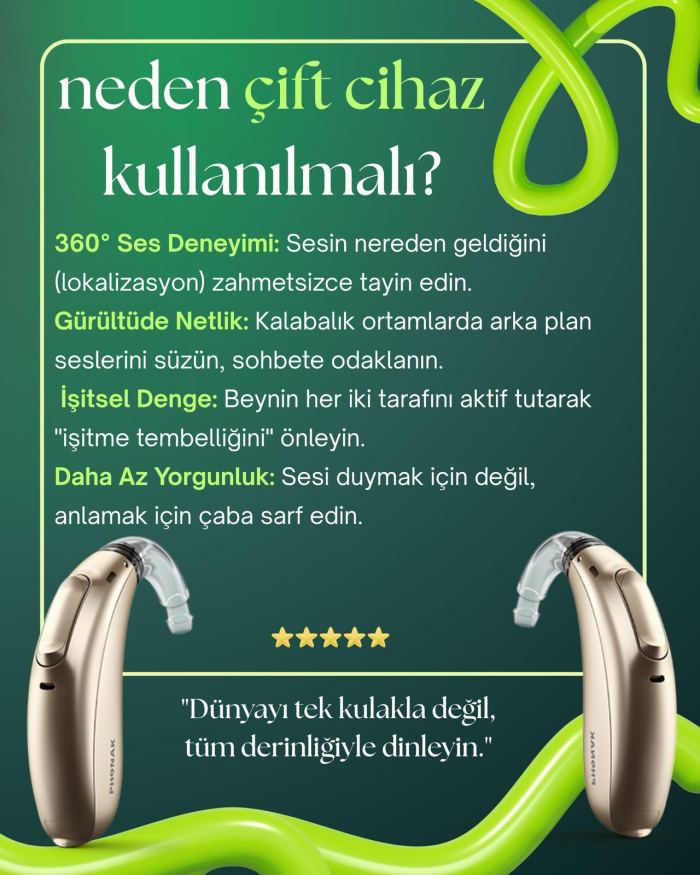
Why Should I Use Two Hearing Aids?
If you have hearing loss in both ears, a single device may not be enough. Using two devices provides a more natural sound experience and protects your brain health.
Our brains expect sound to come from both ears. This is what allows us to accurately perceive the direction and distance of sounds. A single device cannot provide this "two-eared" (binaural) hearing experience.
Benefits of using two devices:
- Understanding conversations much more clearly in noisy environments
- Correctly perceiving the direction sound is coming from (critical for traffic safety)
- More balanced and natural sound quality
- Reducing the risk of auditory nerve atrophy
Research shows that treating bilateral hearing loss with only one device can accelerate hearing loss over time and pave the way for memory problems.
FAQ
Common Myths About Hearing Aids
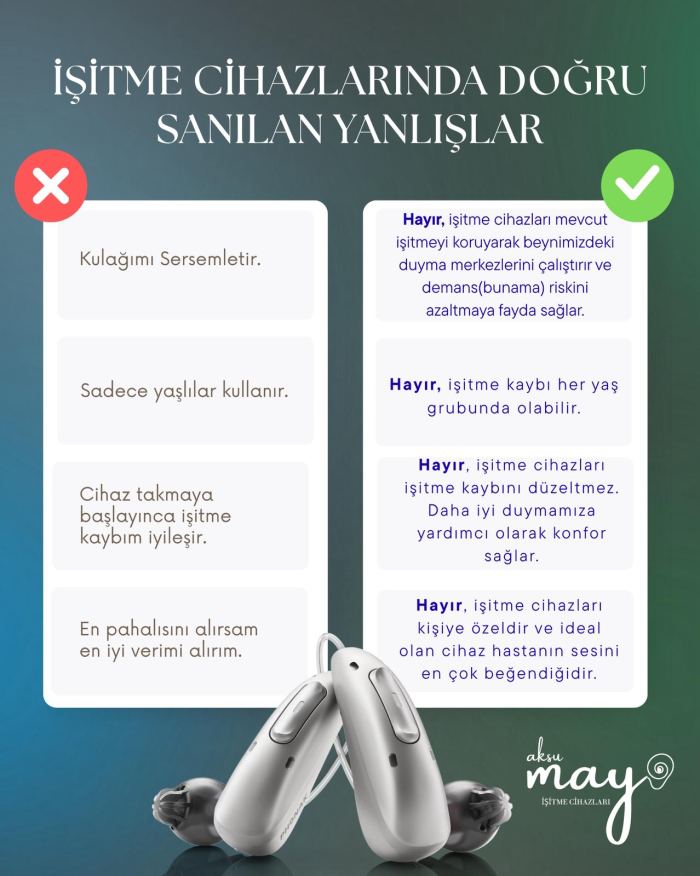
Common myths such as "hearing aids make your ears lazy" or "only elderly people wear them" cause many people to delay the treatment they need.
Myth 1: "Wearing a hearing aid makes your ear lazy"
This is completely false. Hearing aids stimulate the auditory nerves, not the ear itself. Delaying treatment can lead to irreversible damage.
Myth 2: "Only elderly people wear them"
Hearing loss can occur at any age. Children, young people, and middle-aged individuals can also benefit from hearing aids.
Myth 3: "Devices are very noticeable"
Today's RIC and IIC models are nearly invisible. Devices that look as natural as a pair of glasses have become the standard.
Myth 4: "They amplify every sound equally and harm your ears"
Modern digital processors amplify only the frequencies that are needed, resulting in clearer, more natural hearing.
Health & Science
The Link Between Hearing Loss and Dementia
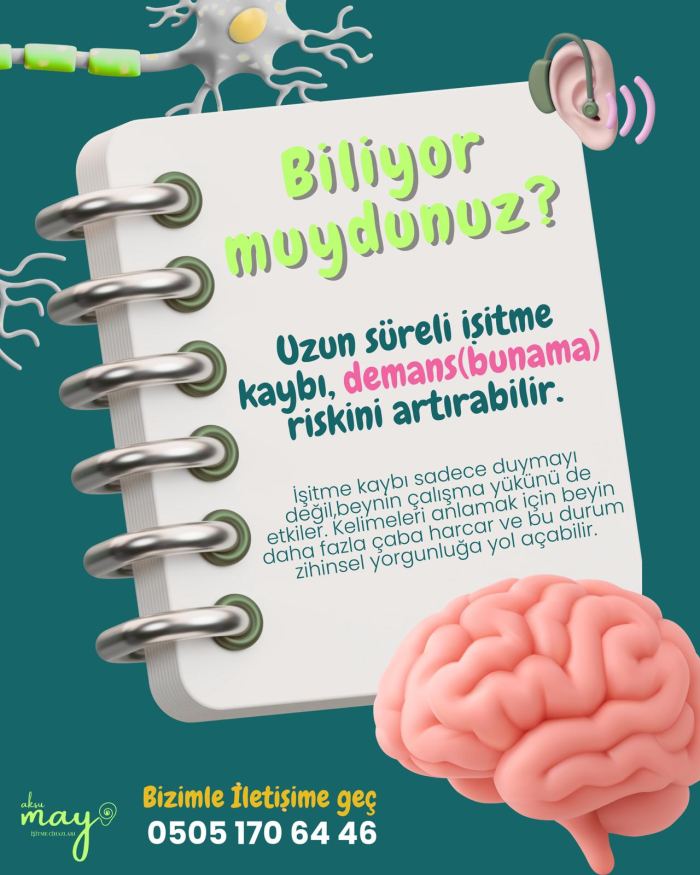
Scientific research shows that untreated hearing loss significantly increases the risk of dementia. Hearing well is vital for brain health.
Comprehensive studies from Johns Hopkins University have shown that untreated moderate hearing loss can increase the risk of dementia by up to threefold.
The main reasons behind this link:
- Cognitive load: A brain struggling to hear spends a great deal of energy trying to make sense of sounds, leaving fewer resources for other cognitive functions.
- Social isolation: People with hearing difficulties tend to withdraw from social settings, even though social connection protects brain health.
- Brain atrophy: Brain regions that no longer receive auditory input can shrink over time.
The good news: cognitive decline has been observed to slow significantly in people who use hearing aids. Early diagnosis and the right device protect both your quality of life and your brain health.
Have a Question?
Have a free initial consultation with our expert audiologist. Let's find the right solution for you together.
Book an Appointment